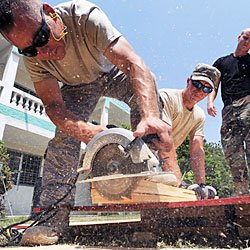
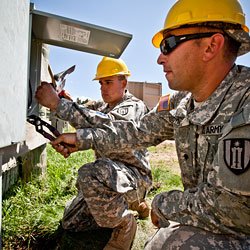
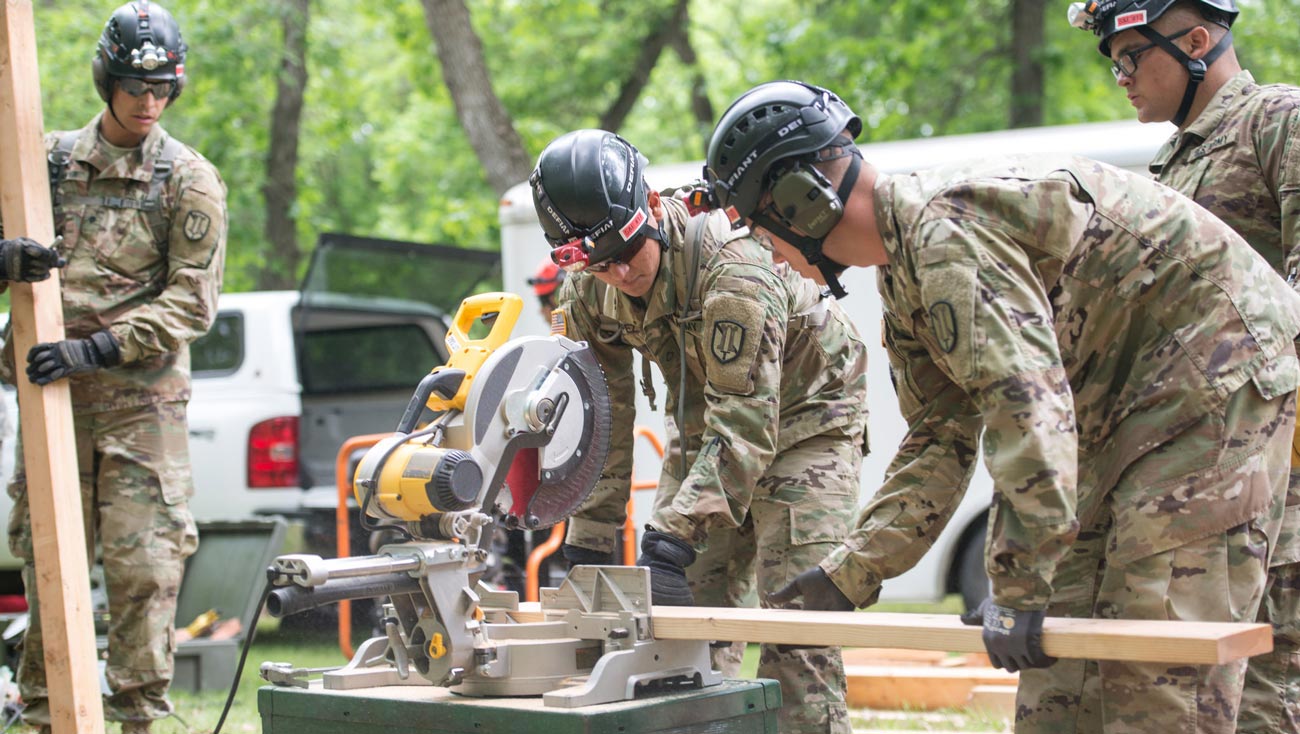
Engineers build anything and everything the Guard needs. From surveying and bulldozing to framing and wiring, engineers take on construction and demolition projects of any size—from start to finish. These experts pave roads and build fortifications for hundreds of Soldiers. In combat, engineers use their skills to shape the battlefield, destroying obstacles and opening routes for troop movement. Guard engineers also work around the globe to assist countries in need of hospitals, schools and running water. Stateside, these problem solvers are pivotal responders during natural disasters, as they clear roads or restore power to communities.
Engineer
20 ways to serve
Explore the complete national career category below. Your North Dakota recruiter can identify current unit vacancies and qualification requirements.
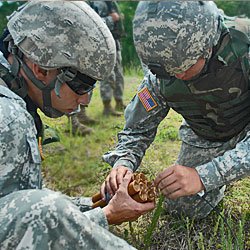
As a combat engineer, you'll get your team out of any tough spot. You'll supervise and assist your team as it tackles rough terrain during combat operations. You will also construct fighting positions, prime and detonate explosives, and become an expert in general engineering.
Bridge crewmembers provide bridge and rafting support for dry and wet gap-crossing operations when a squad, section or platoon tackles rough terrain in combat situations.
Horizontal construction engineers use bulldozers, cranes, graders and other heavy equipment to move tons of earth and material to complete construction projects for the Army National Guard. They are also responsible for operating tractors with dozer attachments, scoop loaders, backhoe loaders, hydraulic excavators, motorized graders and scrapers.
The interior electrician is primarily responsible for the installation and maintenance of all of the Army National Guard's interior electrical systems.
As a technical engineering specialist, you'll write the plan for success by providing the blueprints, diagrams and schematics for anything that needs to be built. You'll survey land with state-of-the-art equipment and software to make your ideas a reality. You'll also ensure the safety and quality of everything being built, taking samples of building materials and testing them in the lab.

 12B